04-23-14 - I've been collecting data for this post since 2010. Considering recent prices for art, it's past time to post:

11-09-15 Modigliani's "Nu Couche" recently sold for $170.4 million
Economic bubbles
Economic bubbles are fascinating specifically because they have little to do with economics, and everything to do with human behavior. In other words, little to do with logic, and everything to do with intuition.
Goods and services have a fundamental value reflected in how the thing contributes to our calories or shelter. Yes, there's more to life than than being fed and dry, but values become more abstract and subjective once security, health and aesthetics become factors. And things get REALLY crazy when human vanity, greed and speculation are brought to bear. These last factors are the source of economic bubbles.
Bubbles are driven by the "Greater Fool Theory" in which the value of something will increase with each transfer as long as there is another a greater fool. Well, until there isn't. The guy holding title when the music stops is the loser. That's when everyone realizes the price of the last transaction was absurd. In other words, there were no more greater fools. After that, the object in question's "value" will drop dramatically and its market go quiet for decades. Whomever is left holding the bag will have to wait until "the thing" comes back in fashion. If ever. There are lots of fools in history, but no one ever talks about their transactions, especially the fools themselves.
Even though the lesson of economic bubbles has been presented many times and in vivid detail, the lesson never seems to take. Or maybe I should say, there always seems to be a greater fool. In the interest of those thinking about becoming a fool and chasing the next bubble, I'll present some historical examples of the phenomenon, their characteristics, and why it's ill-advised to get involved. Finally, for those still interested, I'll present my candidate for the next bubble, and why. Maybe you can get in (and out) early. Let's review some of the more famous bubbles to understand how they expanded, collapsed, and their ultimate impact upon our economy.
Tulip Mania
The genesis of bubble behavior almost certainly goes back to ownership of property itself. There are likely examples lost to history, but one of the earliest and most vivid major economic bubbles was Tulip Mania.
Strange as it may seem, it was literally the selling of future contracts for, of all things, tulip bulbs. Don't let this humble flower fail to impress you. The demand was amazing and provides an example of human behavior run amuck with a thing called fashion. For a flower.
In February of 1637, there were examples of single tulip bulbs selling for the current equivalent of ten years salary for a craftsman - for EACH bulb! This was certainly in the hundreds of thousands of today's dollars. Yep. One flower bulb, a decoration for the table. The key was that each bulb was unique in color and pattern. These bulbs could be farmed, and their contracts traded. Even though many similar families were bred, uniqueness is well, unique. And unique allows for amazing rationalization, or shall we say irrationalization?
Some of the stories are amazing. In one case, a workman mistakenly assumed a valuable tulip bulb on the kitchen table of his employer was a common onion. He sliced it up for his sandwich, (appreciating it for its aesthetic flavor, and fundamental value in calories). When discovered, he was sent to debtor's prison for his error. There are many other examples of how these crazy tulip prices destroyed people's lives. Mania is a good description for the love of these flowers and the strange market it created.
Though this bubble was narrow (a small part of national wealth), it was extremely deep (10,000 multiple). Though narrow, the dramatic multiple significantly increased the asset value of the Bank of Amsterdam for a time. After the bubble popped, negative effects were felt for years. In less than 90 days from the peak price, a tulip bulb was only worth, well, a tulip bulb. It could be argued that the workman above was the most rational person in that economy at that time. A couple of smaller tulip bubbles in other areas happened later, but the value of tulips has never again approached that peak anywhere in the world.
South Seas Bubble
You'd think Tulip Mania would be chapter one in every business book for centuries, but less than 80 years later everyone seems to have forgotten the lesson. The South Seas Bubble had almost nothing to do with the South Seas. Instead, its major asset was literally HALF of England's debt. The hopeful trade with South America allowed for the instruments of speculation (contract shares), and much of the government was complicit in promoting the investment. Soon, people were borrowing to speculate. The shares increased ten-fold before they popped. This bubble was both wide (half the national debt) and fairly deep (ten times any possible fundamental value). When the price collapsed, the resulting debt depressed the economy of England for years.
The First Tech Bubble
Let's move to modern times. The first tech bubble has many good examples, but one I know well - they were a competitor. In 1982 Fortune Systems was building a 68000-based micro-computer system. They raised $110 million in a public offering at a half a billion dollar evaluation. Yes, these numbers are modest compared to today, but in 1982 this was the 7th largest IPO in U.S. history, and 500 million was a lot for a new company with no profits that had shipped fewer than 200 units, most of which were having problems. Of course, the investment was lost when the product didn't pan out. This "little" bubble popped. There were other early public tech offerings but except for a few like Apple Computer, they shared the same fate. This shows bubbles don't have to be big to be crazy. This was a modest bubble at the time, but it provided a taste of what was soon to come.
Tokyo Real Estate Bubble
Japanese real estate prices started rising dramatically in 1986 and were highest in Tokyo's Ginza district in 1989. Choice properties were fetching over 30 million yen per square meter ($20,000 per square foot!). Prices were only marginally less in other large business districts of Tokyo. Literally HALF of the WORLD's real estate value was in one relatively small island called Japan.
By 1990 the party was over. In 2004, prime "A" property in Tokyo's financial districts had slumped to less than 1 percent of its peak, and Tokyo's residential homes were less than a tenth of their peak, but still managed to be listed as the most expensive in the world, only being surpassed in the late 2000s by Moscow and other cities creating their own bubbles. The Tokyo bubble was both wide and deep. Tens of TRILLIONS of dollars worth of "asset value" were wiped out with the combined collapse of the Tokyo real estate and dependent stock markets. Only 18 years later in 2007 had property prices begun to rise, before falling again in late 2008 due to the global downturn. Japan has not yet recovered. It's now been decades.
The Internet Leads the Second Tech Bubble
On the day Netscape went public I gave a talk explaining how there was NO reason to value a company with NO revenue and NO profits at almost 4 BILLION dollars. As it turns out, this too was just a taste of what is common today. By the time the internet bubble crashed in the spring of 2000 it had created an estimated 6.2 TRILLION dollars in value, 90% of which disappeared within weeks. Even though mostly limited to only a segment of technology, this bubble was widely subscribed. Its impact was felt for years.
U.S. Housing Bubble
As money shuffled out of the internet, I began wondering where it would go next. I watched in disbelief as house prices doubled (or in some cases tripled) in California, Nevada, Arizona, and Florida. At the peak, lotteries were held for the RIGHT to buy new residential construction. By 2006, some high-end properties were being sold for up to $700 a square foot at nearby Lake Tahoe, which was far beyond its value in materials. The difference was (ir)rationalized by location, but even in Reno some places sold for over $500 a square foot. And Reno is on the edge of a vast desert whose value approaches zero.
I don't need to go on about the housing bubble. Everyone else already has. I'll just note that it represented "assets" of around 10 TRILLION dollars and seems to have triggered a collapse of a credit bubble on Wall Street of even greater magnitude in late 2008. This housing/credit bubble was also devastating to main street, which continues to be affected six years later.
Chinese Real Estate and Debt Bubble
What may come to be known as the Chinese bubble is similar to what happened in the west but may be far larger when evaluated in retrospect, once good data is available. In the United States, approximately five million "extra" housing units were constructed during the early part of this century. China has built between 70 and ONE HUNDRED MILLION housing units in a similar time-frame. Now, China has a lot more people and many of them need houses, but there was a disconnect in market forces of this construction. Most of these units are executive homes and do not match the need nor demand from the market. Mitigating these glorious ghost cities will be far more difficult than foreclosing and reselling the American homes. If you own anything in China, sell. Which brings us to the point of this post. Where will all the fools go next?
05-05-14 - "Forget it, Jake; it's Chinatown" - more signs of cracks in China:
Zombies once destroyed Japan’s economy—now they’re infecting China’s
11-19-14 - Prices have tripled to over $2600 per square foot in Hong Kong since 2003
And the result:
The Next Bubble...
Now that bubbles are understood, we'll never again get caught. Right? Not necessarily. In Wikipedia on Bubbles it's noted that bubbles are generally identified in retrospect, much like bull and bear markets. Bubbles sneak up on people. As a matter of fact, people (and their human behavior) seem to be their secret sauce.
Is a fool someone who pays more for a thing than its fundamental value? Or is a fool someone who doesn't manage to sell the thing to a greater fool before the music stops? As the price increases well beyond fundamental value, at what instant does one become a fool? Where do the lines get drawn? In retrospect it's easy. Seeing that line while it is happening is more of a challenge.
The truth is, ALL investors are fools to one degree or another. It's just a matter of how long we feed the bubble, and how it eventually deflates. It's all depends on where you get in, and where you get out. That's where the human behaviors of greed, denial, and fear come in.
So what will be the next bubble?
Real estate? Not in our lifetime. Population growth is finally flattening out and may even head down in a couple of decades. In any case, China will be the final nail for real estate bubbles. The upturn in the U.S. real estate last year was just a dead cat bounce. It will abate soon, and mark the beginning of a long flat market for residential real estate in America, and around the world, with a few exceptions.
Stocks? Nope. Like real estate, the current bull market is just a return to normal after the crash. There's already stock bubble talk, which will likely dampen the drive upward in time.
Gold Bubble? Nope. It's too obvious to do more than double unless we have major civil disruption. Also, since it has virtually no fundamental value, it could be argued that gold is always in a bubble. By degrees.
The next significant bubble will be none of the above. The next bubble will be in collectibles, and it's already well underway.
... will be a Zen Bubble
Let's start with contemporary paintings. According to Businessweek, auction sales of postwar contemporary art has gone from a few million dollars in 1988 to nearly $8 billion dollars in 2014. And most of those gains have been since 2003. In another article, Businessweek notes, "There has been a 434% increase in value of the top 50 contemporary and postwar artists since 2003". A record high of $142 million has been set for "Three Studies of Lucian Freud" who only died in 2002. Usually, artists have to be dead for MUCH longer to fetch such absurd prices.
A total of almost $66 BILLION of fine art was sold in 2013. That's only ONE year of ONE segment of collectibles. There's also fine wine, cars, books, stamps, money and too many other obscure segments to be named, which is the real point. With tulips, it was only tulips. With web start-ups, it was only web start-ups. In collectibles, there are at least a million places for fake value to hide, many of them unique. This bubble has truffles at $100K per pound, a figurine for $5 million and a puppy (!) for $1.5 million. Did you even realize people collected truffles? I didn't. And a puppy dies.
The point is, the prices for art (and cars, and wine, and etc.) reflect far more than typical aesthetic value. These prices are dominated by speculation. This is clearly a bubble, no matter how you wish to (ir)rationalize it. Or more precisely, these are bubblets as each of these segments lives in its own world of "investors" who generally ignore the other segments. There is no limit to their (ir)rationalized value. This segmentation is what will make this bubble so different from the ones that have come before. This bubble is not a bubble at all. It's more like foam rising off the euphoria of too much champagne. And as foam, it will play out in a far different way than the typical bubble.
This collectibles bubble is both wide, deep and insidious. Worse than its absurd dollar value is its stealth. The types of collectibles are almost infinite since virtually anything ever created by man or nature can be collected. Many unique items are literally in a class of one. If it has value to anyone, it has value to a speculator. And if it has value to a speculator, its price will ultimately be driven far beyond it's fundamental or aesthetic value.
Like other bubbles, the price of any unique item or the whole segment will increase right up until it doesn't. If you dig deep, you'll find many examples of bubblets collapsing, but most investors don't even notice unless they own something in the segment or that particular item. When each price collapses, these collectors lick their wounds in silence. Who wants to brag about a loss?
Its stealth nature will be the hallmark of this bubble. This collapsing foam of bubblets will not make any major news, well unless a big segment such as fine art collapses in general. But that's less likely because each piece can be effectively (ir)rationalized then hidden away, which will be another aspect of this bubble - the absence of liquidity. Pieces will ultimately be hard to sell, and will therefore go back in the closet. We may even see a time when collectible sales drop off, and the items simply used as collateral for loans, which may drive yet another credit bubble. In any case, this Zen bubble may go on for decades. Or longer.
Here's an example of how a minor bubblet goes out with a whimper, not a bang in only two years:
08-15-18 A Million Dollar Porsche 911 R?
Since a unique item can have a theoretically infinite value, expect some wild examples. Here are a few more I've "collected" over the last several years. Most are just headlines or links. You'll have to Google for details.
The next question is, "when will we see the first BILLION dollar transaction for something with no fundamental value?"
I suspect it'll be sooner than you think:
10-23-14 Apple I Price Update - $905,000!
$330K for 2.87 lbs of rare white truffle!
05-23-11 A Rolex wristwatch made in 1942 sold for a record $1.16 million at Christie's!
$194K for a 38-inch toy boat once owned by Malcolm Forbes!
$302,500 for Andy Warhol print of Mao Zedong - TEN TIMES the estimate!
1923 Leica 0-series becomes world's most expensive camera, fetches $1.89 million at auction!
Marilyn Monroe's Seven Year Itch dress, which went under the hammer at auction on Saturday, is a record breaker. The iconic white dress fetched $5.5 million!
A Stradivarius built in 1721, which once belonged to Lord Byron's granddaughter, sold online for $15.9 million!
06-27-2011 - A Jean-Michel Basquiat self-portrait sold for $3.3 million, five times more than in 2003!
World's oldest running car fetches $4.6 million at auction
10-24-11 - Gerhard Richter's 1982 painting Kerze (Candle) fetched $16.6 million at a Christie's sale, an auction record for the artist, who says the price is "as absurd as the banking crisis".
12-03-11 - Why IS Art So Damned Expensive?
11-07-11 -Queen Victoria's bloomers sold for $15K, three times estimate. Skid marks included for free.
Rare 1787 Gold Coin Sells for $7.4 Million
11-14-11 - Roy Lichtenstein's 1961 painting, I Can See the Whole Room!... and There's Nobody in It! sold for $43 million
11-30-11 - A set of eight scrolls of lotus flowers PAINTED THIS YEAR by Chinese artist Cui Ruzhuo sold for $16 million!
01-16-12 - The ultimate inflation: A 1793 copper one-cent coin sold for $1.38 million at Heritage Auctions, an increase in value of more than a hundred million times.
02-19-12 - The 1889 van Gogh Vue de l'asile et de la Chapelle de Saint-Remy formerly owned by Elizabeth Taylor sold for $16 million.
02-20-12 - The 1963 Francis Bacon "Portrait of Henrietta Moraes" sold for $33 million.
04-09-12 - A Ruyao bowl that dates from 1086 to 1106 sold for $26.7 million at Sotheby's, a record
05-01-12 - This year paintings by Warhol and Munch are expected to sell for more than $50 million each. WRONG!
05-04-12 - Munch's "The Scream" went for $119.9 million dollars, more than twice estimates. Warhol's Elvis only brought $37 million, for an average of $78.5 million, 57% over estimates.
Why did this Mini sell for over $65,000?
05-08-12 - A teacup Lady Gaga used last year in Japan sold for $75,000. What's next, used toilet tissue?
05-09-12 The $412 check that DC Comics gave artist Jerry Siegel and Joe Shuster in 1938 to buy the right to the Superman character fetched $160,000 at an online auction.
05-11-12 A blue flannel New York Yankees baseball cap worn by Babe Ruth in 1930 is on the block, estimated to be worth $400,000.
05-15-12 Mark Rothko's fiery 1961 canvas, Orange, Red, Yellow fetched a record $86.9 million after a $45 million estimate.
07-07-12 Joan Miro's 1927 Peinture fetched $37 million at Sotheby's
08-20-12 Cover art for issue 328 of The Amazing Spider-Man sold for $657,250, a record for comic book art.
09-01-12 and setting new records in each category:
Cezanne's painting "The Card Players" for $250 million
Superman's first edition went for $2.16 million.
The first map of the United States for $1.5 million
A live Red Tibetan Mastiff puppy for $1.5 million
Audubon 1st edition bird book $11.5 million
10-18-12 - The two guns taken off Bonnie Parker and Clyde Barrow sold for a total of $504,000. I wonder if they could have appreciated the irony.
10-22-12 - Two 1941 Sun Yat-sen stamps sold for $709,000
11-19-12 - The 1951 drip painting Number 4 by Jackson Pollock sold for $40,400,000 at Sotheby's.
Indian weddings have become a bubble and are an excellent example of bizarre human fashion. The wedding industry in India is now growing at 25% per year. India is now consuming 30% of the world's gold production, and half of it goes for Indian weddings. The estimates for 2012 wedding costs in India are about $40 billion, and this is in a country with a per capita GDP of only $4000. Could this gold be considered a collectible?

1988 Jeff Koons sculpture of Buster Keaton on a horse - sold for $5 million 12-17-12
2013 It's not exactly collectible, but perhaps ephemeral gastronomic art? A record price for a single tuna of $1.8 million was paid for one 490 pound fish.
01-24-13 - "Rick Champagne, a 56-year-old company owner from Arizona has bought the original Batmobile (dating back to Burt Ward and the '60s) for $4.2 million. He's quoted as saying it 'was a dream come true.' From the article: 'The Batmobile design was based on a 1955 Lincoln Futura, a concept car built in Italy by the Ford Motor Company. It was the first time that car had come up for public sale since it was bought in 1965 by car-customizer George Barris, who transformed it in 15 days, at the cost of $15,000 (£9,400), into the superhero's famous vehicle.'"
03-20-13 - A blood-stained sock worn by Boston Red Sox pitcher Curt Schilling in the 2004 World Series fetched $92,613 at auction.
1967 Ferrari 275 GTB/4 NART Spider sells for incredible $27.5 millionNow that bubbles are understood, we'll never again get caught. Right? Not necessarily. In Wikipedia on Bubbles it's noted that bubbles are generally identified in retrospect, much like bull and bear markets. Bubbles sneak up on people. As a matter of fact, people (and their human behavior) seem to be their secret sauce.
Is a fool someone who pays more for a thing than its fundamental value? Or is a fool someone who doesn't manage to sell the thing to a greater fool before the music stops? As the price increases well beyond fundamental value, at what instant does one become a fool? Where do the lines get drawn? In retrospect it's easy. Seeing that line while it is happening is more of a challenge.
The truth is, ALL investors are fools to one degree or another. It's just a matter of how long we feed the bubble, and how it eventually deflates. It's all depends on where you get in, and where you get out. That's where the human behaviors of greed, denial, and fear come in.
So what will be the next bubble?
Real estate? Not in our lifetime. Population growth is finally flattening out and may even head down in a couple of decades. In any case, China will be the final nail for real estate bubbles. The upturn in the U.S. real estate last year was just a dead cat bounce. It will abate soon, and mark the beginning of a long flat market for residential real estate in America, and around the world, with a few exceptions.
Stocks? Nope. Like real estate, the current bull market is just a return to normal after the crash. There's already stock bubble talk, which will likely dampen the drive upward in time.
Gold Bubble? Nope. It's too obvious to do more than double unless we have major civil disruption. Also, since it has virtually no fundamental value, it could be argued that gold is always in a bubble. By degrees.
The next significant bubble will be none of the above. The next bubble will be in collectibles, and it's already well underway.
... will be a Zen Bubble
Let's start with contemporary paintings. According to Businessweek, auction sales of postwar contemporary art has gone from a few million dollars in 1988 to nearly $8 billion dollars in 2014. And most of those gains have been since 2003. In another article, Businessweek notes, "There has been a 434% increase in value of the top 50 contemporary and postwar artists since 2003". A record high of $142 million has been set for "Three Studies of Lucian Freud" who only died in 2002. Usually, artists have to be dead for MUCH longer to fetch such absurd prices.
A total of almost $66 BILLION of fine art was sold in 2013. That's only ONE year of ONE segment of collectibles. There's also fine wine, cars, books, stamps, money and too many other obscure segments to be named, which is the real point. With tulips, it was only tulips. With web start-ups, it was only web start-ups. In collectibles, there are at least a million places for fake value to hide, many of them unique. This bubble has truffles at $100K per pound, a figurine for $5 million and a puppy (!) for $1.5 million. Did you even realize people collected truffles? I didn't. And a puppy dies.
The point is, the prices for art (and cars, and wine, and etc.) reflect far more than typical aesthetic value. These prices are dominated by speculation. This is clearly a bubble, no matter how you wish to (ir)rationalize it. Or more precisely, these are bubblets as each of these segments lives in its own world of "investors" who generally ignore the other segments. There is no limit to their (ir)rationalized value. This segmentation is what will make this bubble so different from the ones that have come before. This bubble is not a bubble at all. It's more like foam rising off the euphoria of too much champagne. And as foam, it will play out in a far different way than the typical bubble.
This collectibles bubble is both wide, deep and insidious. Worse than its absurd dollar value is its stealth. The types of collectibles are almost infinite since virtually anything ever created by man or nature can be collected. Many unique items are literally in a class of one. If it has value to anyone, it has value to a speculator. And if it has value to a speculator, its price will ultimately be driven far beyond it's fundamental or aesthetic value.
Like other bubbles, the price of any unique item or the whole segment will increase right up until it doesn't. If you dig deep, you'll find many examples of bubblets collapsing, but most investors don't even notice unless they own something in the segment or that particular item. When each price collapses, these collectors lick their wounds in silence. Who wants to brag about a loss?
Its stealth nature will be the hallmark of this bubble. This collapsing foam of bubblets will not make any major news, well unless a big segment such as fine art collapses in general. But that's less likely because each piece can be effectively (ir)rationalized then hidden away, which will be another aspect of this bubble - the absence of liquidity. Pieces will ultimately be hard to sell, and will therefore go back in the closet. We may even see a time when collectible sales drop off, and the items simply used as collateral for loans, which may drive yet another credit bubble. In any case, this Zen bubble may go on for decades. Or longer.
Here's an example of how a minor bubblet goes out with a whimper, not a bang in only two years:
08-15-18 A Million Dollar Porsche 911 R?
Since a unique item can have a theoretically infinite value, expect some wild examples. Here are a few more I've "collected" over the last several years. Most are just headlines or links. You'll have to Google for details.
The next question is, "when will we see the first BILLION dollar transaction for something with no fundamental value?"
"$210,700 for a $666.66 Computer! An Apple computer purchased more than 30 years ago has sold for 316 times its original selling price. From the article: 'An Apple-1, one of only about 200 such machines built in Apple co-founder Steve Jobs' parents' garage, sold at Christie's auction house in London today for 133,250 pounds (about $210,700). The Apple-1, which didn't include a casing, power supply, keyboard, or monitor, originally retailed for $666.66 in 1976. Apple discontinued the model in 1977.'"
10-23-14 Apple I Price Update - $905,000!
$330K for 2.87 lbs of rare white truffle!
05-23-11 A Rolex wristwatch made in 1942 sold for a record $1.16 million at Christie's!
$194K for a 38-inch toy boat once owned by Malcolm Forbes!
$302,500 for Andy Warhol print of Mao Zedong - TEN TIMES the estimate!
1923 Leica 0-series becomes world's most expensive camera, fetches $1.89 million at auction!
Marilyn Monroe's Seven Year Itch dress, which went under the hammer at auction on Saturday, is a record breaker. The iconic white dress fetched $5.5 million!
A Stradivarius built in 1721, which once belonged to Lord Byron's granddaughter, sold online for $15.9 million!
06-27-2011 - A Jean-Michel Basquiat self-portrait sold for $3.3 million, five times more than in 2003!
World's oldest running car fetches $4.6 million at auction
10-24-11 - Gerhard Richter's 1982 painting Kerze (Candle) fetched $16.6 million at a Christie's sale, an auction record for the artist, who says the price is "as absurd as the banking crisis".
12-03-11 - Why IS Art So Damned Expensive?
11-07-11 -Queen Victoria's bloomers sold for $15K, three times estimate. Skid marks included for free.
Rare 1787 Gold Coin Sells for $7.4 Million
11-14-11 - Roy Lichtenstein's 1961 painting, I Can See the Whole Room!... and There's Nobody in It! sold for $43 million
11-30-11 - A set of eight scrolls of lotus flowers PAINTED THIS YEAR by Chinese artist Cui Ruzhuo sold for $16 million!
01-16-12 - The ultimate inflation: A 1793 copper one-cent coin sold for $1.38 million at Heritage Auctions, an increase in value of more than a hundred million times.
02-19-12 - The 1889 van Gogh Vue de l'asile et de la Chapelle de Saint-Remy formerly owned by Elizabeth Taylor sold for $16 million.
02-20-12 - The 1963 Francis Bacon "Portrait of Henrietta Moraes" sold for $33 million.
04-09-12 - A Ruyao bowl that dates from 1086 to 1106 sold for $26.7 million at Sotheby's, a record
05-01-12 - This year paintings by Warhol and Munch are expected to sell for more than $50 million each. WRONG!
05-04-12 - Munch's "The Scream" went for $119.9 million dollars, more than twice estimates. Warhol's Elvis only brought $37 million, for an average of $78.5 million, 57% over estimates.
Why did this Mini sell for over $65,000?
05-08-12 - A teacup Lady Gaga used last year in Japan sold for $75,000. What's next, used toilet tissue?
05-09-12 The $412 check that DC Comics gave artist Jerry Siegel and Joe Shuster in 1938 to buy the right to the Superman character fetched $160,000 at an online auction.
05-11-12 A blue flannel New York Yankees baseball cap worn by Babe Ruth in 1930 is on the block, estimated to be worth $400,000.
05-15-12 Mark Rothko's fiery 1961 canvas, Orange, Red, Yellow fetched a record $86.9 million after a $45 million estimate.
07-07-12 Joan Miro's 1927 Peinture fetched $37 million at Sotheby's
08-20-12 Cover art for issue 328 of The Amazing Spider-Man sold for $657,250, a record for comic book art.
09-01-12 and setting new records in each category:
Cezanne's painting "The Card Players" for $250 million
Superman's first edition went for $2.16 million.
The first map of the United States for $1.5 million
A live Red Tibetan Mastiff puppy for $1.5 million
Audubon 1st edition bird book $11.5 million
10-18-12 - The two guns taken off Bonnie Parker and Clyde Barrow sold for a total of $504,000. I wonder if they could have appreciated the irony.
10-22-12 - Two 1941 Sun Yat-sen stamps sold for $709,000
11-19-12 - The 1951 drip painting Number 4 by Jackson Pollock sold for $40,400,000 at Sotheby's.
Indian weddings have become a bubble and are an excellent example of bizarre human fashion. The wedding industry in India is now growing at 25% per year. India is now consuming 30% of the world's gold production, and half of it goes for Indian weddings. The estimates for 2012 wedding costs in India are about $40 billion, and this is in a country with a per capita GDP of only $4000. Could this gold be considered a collectible?

1988 Jeff Koons sculpture of Buster Keaton on a horse - sold for $5 million 12-17-12
2013 It's not exactly collectible, but perhaps ephemeral gastronomic art? A record price for a single tuna of $1.8 million was paid for one 490 pound fish.
01-24-13 - "Rick Champagne, a 56-year-old company owner from Arizona has bought the original Batmobile (dating back to Burt Ward and the '60s) for $4.2 million. He's quoted as saying it 'was a dream come true.' From the article: 'The Batmobile design was based on a 1955 Lincoln Futura, a concept car built in Italy by the Ford Motor Company. It was the first time that car had come up for public sale since it was bought in 1965 by car-customizer George Barris, who transformed it in 15 days, at the cost of $15,000 (£9,400), into the superhero's famous vehicle.'"
03-20-13 - A blood-stained sock worn by Boston Red Sox pitcher Curt Schilling in the 2004 World Series fetched $92,613 at auction.
07-01-13 An untitled 1982 painting by Jean-Michel Basquiat sold for $29 million at Christie's
09-04-13 A vintage Ferrari Spyder convertible sold for 28 million in the same week that a diamond and a yacht went for about same amount. Is $30 million a special price point?
10-14-13 Sotheby's sets new record prices in China with $30,800,000 for a diamond, $30,500,000 million for a bronze Buddha and $23,300,000 for Zeng Fanzhi's, "The Last Supper", the highest price ever for a contemporary Asian artist.
11-18-13 The car that won the 1954 Formula 1 world championship, a Mercedes-Benz W196R coupe became the most expensive car ever sold at $30 million.
04-30-2014 "In 2013, one blue-fin tuna was auctioned off for $1.7 million..." I hope they froze some of it.
05-01-14 Even sales of early scraps of an artist's work have exceeded a million dollars:
DYLAN'S 'LIKE A ROLLING STONE' HEADS TO AUCTION
04-25-14 A collector paid $2 million for Bob Dylan's "Like a Rolling Stone", a record for lyrics.
05-15-14 I'm not sure if unique houses qualify as collectible, but it's hard to imagine any other reason to pay this much and it would certainly break the billion dollar absurd threshold I mentioned above :
The Most Expensive Homes in the World
05-15-14 I'm not sure if unique houses qualify as collectible, but it's hard to imagine any other reason to pay this much and it would certainly break the billion dollar absurd threshold I mentioned above :
The Most Expensive Homes in the World
And one more from the age of opulence:
This Absurd Mansion Features Star Trek-Themed Rooms And Could Be Yours For $35 Million
And what's up with Popeye?
Steve Wynn paid $28 million for Jeff Koons sculpture of Popeye.
Andy Warhol's Popeye is appraised at $50 million.
Roy Lichtenstein's Popeye is appraised at $47 million.
It makes one want to open a can of spinach and draw some cartoons.
Why are so many people paying so much money for art?
"Owning collectibles offers one major advantage – one that I think drives 90% of the demand for collectibles: It's a great way to protect your wealth from the IRS. People know that when they die, the IRS won't have any idea what is hanging on their walls or hiding in their vaults. Or what they are worth. Often they have to use the purchase price from years ago. So they hide money in these trophies to give to their children to avoid estate taxes. Mind you, I'm not passing judgment on these actions, nor am I recommending them. I just believe that's why a lot of demand for collectibles exists.
Collectibles are also easily transferable across borders. You can take a Picasso on a private jet and move $100 million offshore. And no one has to know.
When you buy collectibles, you're betting on the irresponsibility of the government and the wickedness of the tax system… If the government gets more irresponsible and the tax system gets more heinous, you'll probably do well. And I think that's a good bet. But you should understand what you're betting on."
04-29-14 - The above observation is an excellent example of how tax policy can distort markets. It's also an excellent reason to collect, and a reasonable rationalization.
07-09-14 Claude Monet's "Water Lilies" sold for $54 million.
09-04-14 A copy of the first Superman Comic which originally went for ten cents sold for $3.2 million yielding a multiple of 32 million times its original value.
09-07-14 A 1962 250 GTO Ferrari sold for $38 million and is lifting prices for all sports cars of the era - a nano-bubble of its own?
09-18-14 - Hyundai spending $10B for 20 acres turns land into a collector's item for the first time. This is in the price range of the Tokyo bubble of 1989. They could have done a lot better in the Nevada desert like Tesla just did - a THOUSAND acres for FREE. Even Tesla's 370 acres in the BAY AREA, some of the more expensive land on Earth only cost them $42M - and it had a 5.5 million square foot working factory on it! Has Hyundai been bit with bidding fever in the process of taking the site away from Samsung? Did this bidding war turn this plot into a collector's item?
10-16-14 BUY THE PAINTING HOLD THE PAINTING SELL THE PAINTING
From the above link: "A Francis Bacon triptych set an auction record for any artwork, at $142.4 million. Jeff Koons’s sculpture Balloon Dog (Orange), at $58.4 million, set a high mark for a living artist. An Andy Warhol picture of a Coca-Cola bottle sold for $57.3 million, pushing the overall take that night to $692 million, at the time the biggest single sale of art ever."
"The final price for Apocalypse Now, including the buyer’s premium paid to Christie’s: $26.4 million. It had appreciated roughly 350,000 percent in 25 years."
11-25-14 - The Cowardly Lion costume from the classic film "The Wizard of Oz" and the piano from the movie "Casablanca" each sold for over $3 million at a New York City auction.
01-19-15 - $100 Million New York Apartment
5-5-15 A Honus Wagner baseball card sold for $1.3 million
5-12-15 Picasso's Picasso's Les Femmes d'Alger, "Version O" sold for $179 million, a record.

05-13-15 A Mark Rothko painting sold for $46.5 million at a Sotheby's

06-20-15 A Hermes Birkin purse sold for $222,000. It certainly wouldn't hold that much.
11-11-15 Cohen's Warhol `Mao' Portrait Fetches $47.5 Million at Sotheby's
11-11-15 Titanic cracker sells for $23k
11-30-15 $173k paid for a Michael Jordan jersey
12-17-15 A letter signed by Mao Zedong sells for $918,000
02-05-16 1937 Mercedes 540K sets Arizona record at $9.9 million
02-16-16 Delaware license plate #14 sold for $325K as an investment. Here there was no magic art involved at all, just a magic number.
02-28-16 The most paid for a Basquiat was set in 2013 when $48.8 million was paid for Dustheads:

06-01-16 An auction yielded $1.3 million dollars for the Winchester rifle owned by the Army captain who captured Geronimo.
07-29-16 Perhaps much of the art world is not what it seems:
Miles Mathis on Laundered Art
08-01-16 Richard Mille fountain pen sells for $100,000, just the normal retail price.
08-01-16 $300k for a new Birkin handbag. When does something become collectible?
08-20-16 Very first Shelby Cobra sells for $13.75 million, a new record for an American car
08-24-16 1955 Jaguar D-Type that won Le Mans sets $21.78 million record price at auction
10-03-16 $600k for a new Cartier watch - is this an attempt to create collectibles because of a 1982 Nautilus watch sold $909k last year?
10-31-17 Paul Newman's Rolex Daytona watch just sold for a record $17.75 million
11-16-17 Leonardo Da Vinci (?) Portrait Of Christ Sells For Record-Shattering $450 Million
Even the tools of art take on a special value:
03-14-18 Leica Camera Sold for $2.96 Million, a New Record
03-14-18 When a tip became worth $1.56 million, from Thus spake Albert :
"The paper was inscribed and autographed in Japan on the stationery of the Imperial Hotel in Tokyo and dated November 1922, the month in which Einstein was awarded the Nobel Prize in Physics. He stayed at this hotel during his massively popular lecture tour of Japan, when he attracted even more attention than the Japanese imperial family. Apparently somewhat embarrassed by such frenetic publicity, Einstein decided to record some of his thoughts and feelings about life in writing. He gave this particular sentence (and another shorter one) to a Japanese delivery courier, either because the courier refused to accept a tip, in keeping with local practice, or because Einstein had no small change. ‘Maybe if you’re lucky those notes will become much more valuable than just a regular tip,’ Einstein apparently told the unnamed Japanese courier, according to the document’s seller, reported by the BBC to be the courier’s nephew.
The Jerusalem auction house estimated that the note would sell for between $5,000 and $8,000. Bidding started at $2,000. For about 20 minutes, a flurry of offers pushed up the price rapidly, until the final two bidders vied for the trophy by telephone. By the end, the price had risen to a scarcely believable $1.56 million.
Translated into English, Einstein’s sentence reads: ‘A calm and modest life brings more happiness than the pursuit of success combined with constant restlessness.’
The absurdity of this auction would not have been lost on Einstein, were he still with us. During the second half of his life, following the British-led astronomical confirmation of his theory of general relativity in 1919, he was unfailingly puzzled by his celebrity and uninterested in amassing money for its own sake."
OK, I admit it's not a collectible, but perhaps the first real cybercoin bubble? Either way, it's interesting to follow:
09-07-17 Bitcoin Breaks $5,000 in Latest Price Frenzy
12-02-17 At $11,000, when Grandma joins the frenzy, you know bitcoin is turning into a bubble
09-20-18 - The housing bubble, part 2? Hong Kong’s previous record sale was set in 2016, when a house at 15 Gough Hill Road on the Peak fetched HK$2.1 billion, according to Colliers International Inc.
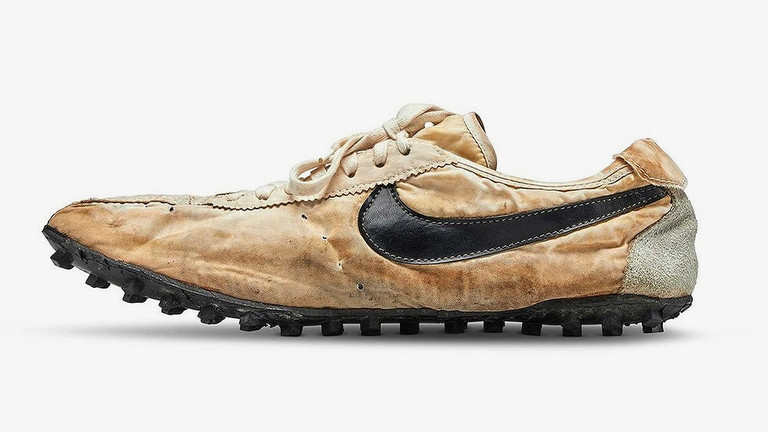
07-28-19 $437,500 for a pair of old shoes:
Holy Relics
What will it be next?
01-11-20
Bullitt Mustang fetches high-caliber price: $3.74 million
Housing Bubble 2.0?
01-23-20 Texas Real Estate Broker Reveals Why the Housing Market Could Implode
03-02-21 Collecting has left the physical world. Are NFTs a great place for value to be stored?
03-08-21 - A 10-second video of LeBron dunking just sold for $200K. We're talking NFTs.
03-11-21 Beeple's 5,000-day digital art collection sells for $69.4 million
03-18-21 NYC man sells fart for $85, cashing in on NFT craze